Showing posts with label psychology. Show all posts

Turning the Corner on Grief Street: Loss and Bereavement as a Jouney of Awakening by Terri Daniel

>> Saturday, February 21, 2015
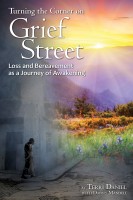

Terri Daniel's new book, "Turning the Corner on Grief Street" begins where her previous books left off, by assuming that we are ready to accept grief and loss as not only necessary for spiritual growth, but also as sacred journeys that can elevate our perspectives and expand us rather than annihilate us.


We will all face the death of a loved one at some point in our lives, and inevitably, we will face our own deaths as well. Terri Daniel's new book, Turning the Corner on Grief Street begins where her previous books left off, by assuming that we are ready to accept these experiences as not only necessary for spiritual growth, but also as sacred journeys that can elevate our perspectives and expand us rather than annihilate us.


Grief Street introduces a new "grief code," which is found in a brave new world where grief can be viewed as a gift as well as a tragedy. In this world, death is not the enemy, and grief does not have to be paralyzing. Instead, we can welcome the ways in which grief shakes us loose from our spiritual lethargy and creates a wound that is much more than a wound… it is an opening to higher awareness that can lead us to greater peace in life and in death.


Terri Daniel is an ordained interfaith minister, clinical chaplain and intuitive counselor who assists dying and grieving individuals to discover a more spiritually spacious understanding of death and beyond. She is the author of two previous books: A Swan in Heaven: Conversations Between Two Worlds, which chronicles after-death dialogs with her son Danny, who died at age 16 in 2006; and Embracing Death: A New Look at Grief, Gratitude and God, offering a unique metaphysical perspective on birth, death and the afterlife via her channeled teachings on religious history, spirituality and the journey of the soul.


Terri is an in-demand teacher, speaker and workshop presenter for conferences and symposiums worldwide. Her experience includes facilitating bereavement support groups for children and adults, hospice and hospital chaplaincy, shamanic practices for helping souls cross over, sacred ceremonies, death-awareness education and grief counseling. In 2010 she founded the Afterlife Education Foundation and its annual conference, which features the world's leading researchers, counselors and educators in the metaphysics of death, dying and bereavement.


About Terri Daniel


Terri Daniel is an author, spiritual teacher and Certified Transition Guide who works with assistance from the Other Side to advance a metaphysical perspective on birth, death and the afterlife.


Her recent book, "A Swan In Heaven" is based on after-death dialogs between Terri and her son, who left the physical plane at age 16. Her new book, "Embracing Death: A New Look at Grief, Gratitude and God," examines cultural myths about the afterlife and offers a path to alternative perceptions via meditation, visualization and channeling.


Terri conducts workshops and metaphysical study groups around the U.S. and also counsels bereaved individuals by offering alternative perspectives on the experience of grief and loss. She has spoken on the topic of conscious death to community gatherings, churches, bereavement groups and spiritual conferences, and her articles have been published in Whole Life Times, Neurology Today, Exceptional Parent, Pure Inspiration, Special Child, Children’s Hospice.org and related websites.


First 20% Sample: epub mobi (Kindle) lrf
Read more...

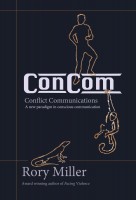
ConCom: Conflict Communication, A New Paradigm in Conscious Communication by Rory Miller

>> Thursday, September 11, 2014


ConCom:Conflict Communication, A New Paradigm in Conscious Communication may be the Rosetta Stone of all conflict. Using simple, intuitive models, ConCom gives a functional taxonomy of real conflict, a language and way of seeing so precise that one can identify, understand and manipulate the underlying causes of most human conflict.


ConCom:Conflict Communication, A New Paradigm in Conscious Communication may be the Rosetta Stone of all conflict. Using simple, intuitive models, ConCom gives a functional taxonomy of real conflict, a language and way of seeing so precise that one can identify, understand and manipulate the underlying causes of most human conflict. The program that spawned this book was designed by Rory Miller, a former Corrections Officer and best-selling author in the field of self-defense and Marc MacYoung, a former criminal and pioneer in the field of Reality-Based Self-Defense. In two short years the program has been taught to police agencies, hospitals and private corporations in at least nine countries and eleven states.


About Rory Miller


After nearly thirty years in martial arts, 18 working with violent criminals in Corrections and a year as a contractor in Iraq, I now teach and write on the subject of violence. I've been a military medic; a tactical team member and leader; a corrections officer and sergeant.


Basically, I'm a little scarred up, but generally happy.


Price: $8.99 USD

First 15% Sample: epub | mobi (Kindle) | lrf
Read more...

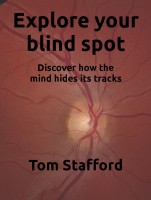
Explore your blind spot by Tom Stafford

>> Wednesday, March 12, 2014


Discover how the mind hides its tracks.


This is a short guide to one of the secrets of mind and brain. Find out about the gaps in your vision and how your mind is designed to stop you noticing them.


About Tom Stafford


Tom Stafford is the co-author of Mind Hacks (2004) and the Rough Guide to Brain Training (2010). He is a lecturer in Psychology and Cognitive Science at the University of Sheffield, UK


Price: Free!

Download: epub | mobi (Kindle) | pdf
Read more...

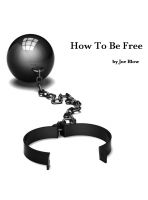
How to Be Free by Joe Blow

>> Monday, March 10, 2014


How can we free ourselves from mental suffering? How can we unlock what the poet William Blake referred to as “the mind-forged manacles” - those unhelpful, unfounded and inflexible habits of thought which keep us from reaching our true creative potential?


How can we free ourselves from mental suffering? How can we unlock what the poet William Blake referred to as “the mind-forged manacles” - those unhelpful, unfounded and inflexible habits of thought which keep us from reaching our true creative potential?


This book provides practical advice on how to achieve this.


But it also offers an imaginative holistic theoretical framework for an understanding of the nature of the universe, the psychological history of the human race and the meaning of life.


What Readers Have Said About "How to Be Free" :


"I just wanted to thank you for publishing 'How to Be Free'. It helped me through many hard times that have recently occurred. My self-esteem has been raised because of you."


"This is a book that is full of insight and as a psychology major, I would highly recommend this book for all open minds."


"Opened my eyes and changed my life."


"...it fucking changed my life."


"This book is dark, deep and brilliantly written. I'm very moved by the author's candidness about mental illnesses, a subject that has become extinct in our conversations and dealings. Here is a person who reached deep inside himself and spilled his soul out onto each page... and he did it so eloquently. I applaud him for bringing me to tears."


"Really loved the book. It made me think, self reflect and take a deeper look at my own self."


"I found your book particularly helpful at a low point in my life... You have given me new hope..."


"Your book has made me a happier person already!"


"...an awesome book..."


About Joe Blow


Joe Blow is the pseudonym for a man who, though currently happy and high functioning, has had a long history of mental illness, including endogenous depression, bipolar disorder and obsessive compulsive disorder. His writing is the product of a lifelong struggle to integrate flashes of insight and powerful symbols which appeared to him, often during what we might define as psychotic episodes, with observable reality and a rudimentary knowledge of science by appropriating useful concepts from the work of such iconoclastic thinkers as Wilhelm Reich, R. D. Laing, Keith Johnstone, William Blake and Oscar Wilde.


If asked whether this approach and this conceptual framework have provided him with a secure foundation for emotional stability, happiness and flowering creativity, Blow would reply, “Well, so far so good.”


He also writes humorous erotica under the pseudonym Aussiescribbler.


Price: Free!

Download: epub | mobi (Kindle) | pdf
Read more...

Explore your blind spot by Tom Stafford

>> Wednesday, March 5, 2014


Discover how the mind hides its tracks.


This is a short guide to one of the secrets of mind and brain. Find out about the gaps in your vision and how your mind is designed to stop you noticing them.


About Tom Stafford


Tom Stafford is the co-author of Mind Hacks (2004) and the Rough Guide to Brain Training (2010). He is a lecturer in Psychology and Cognitive Science at the University of Sheffield, UK


Price: Free!

Download: epub | mobi (Kindle) | pdf
Read more...

Quiet: The Power of Introverts in a World That Can't

>> Sunday, September 15, 2013

Quiet: The Power of Introverts in a World That Can't Stop Talking

Quiet: The Power of Introverts in a World That Can't Stop Talking

At least one-third of the people we know are introverts. They are the ones who prefer listening to speaking, reading to partying; who innovate and create but dislike self-promotion; who favor working on their own over brainstorming in teams. Although they are often labeled "quiet," it is to introverts that we owe many of the great contributions to society--from van Gogh's sunflowers to the invention of the personal computer.

Passionately argued, impressively researched, and filled with indelible stories of real people, Quiet shows how dramatically we undervalue introverts, and how much we lose in doing so. Taking the reader on a journey from Dale Carnegie's birthplace to Harvard Business School, from a Tony Robbins seminar to an evangelical megachurch, Susan Cain charts the rise of the Extrovert Ideal in the twentieth century and explores its far-reaching effects. She talks to Asian-American students who feel alienated from the brash, backslapping atmosphere of American schools. She questions the dominant values of American business culture, where forced collaboration can stand in the way of innovation, and where the leadership potential of introverts is often overlooked. And she draws on cutting-edge research in psychology and neuroscience to reveal the surprising differences between extroverts and introverts.

Perhaps most inspiring, she introduces us to successful introverts--from a witty, high-octane public speaker who recharges in solitude after his talks, to a record-breaking salesman who quietly taps into the power of questions. Finally, she offers invaluable advice on everything from how to better negotiate differences in introvert-extrovert relationships to how to empower an introverted child to when it makes sense to be a "pretend extrovert."

This extraordinary book has the power to permanently change how we see introverts and, equally important, how introverts see themselves.

About the author of Quiet: The Power of Introverts in a World That Can't Stop Talking
Hi, I'm Susan Cain, author of the forthcoming book, "QUIET: The Power of Introverts in a World That Can't Stop Talking" (Crown Publishers in the U.S., Viking/Penguin in the U.K., Jan. 2012).Before I became a writer, I practiced corporate law for seven years, representing clients like Goldman Sachs and General Electric. Then I started a negotiation consultancy, training all kinds of people, from hedge fund managers to TV producers to college students negotiating their first salaries. My clients have included Merrill Lynch, Shearman and Sterling, One Hundred Women in Hedge Funds, and many more. I went to Princeton University and Harvard Law School.From this you might guess that I'm a hardcore, wonderfully self-confident, pound-the-table kind of person, when in fact I'm just the opposite. I prefer listening to talking, reading to socializing, and cozy chats to group settings. I like to think… ...

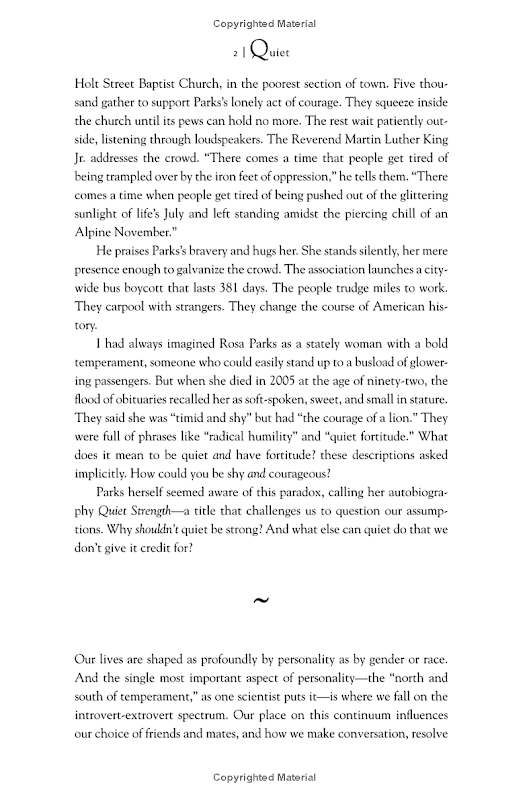
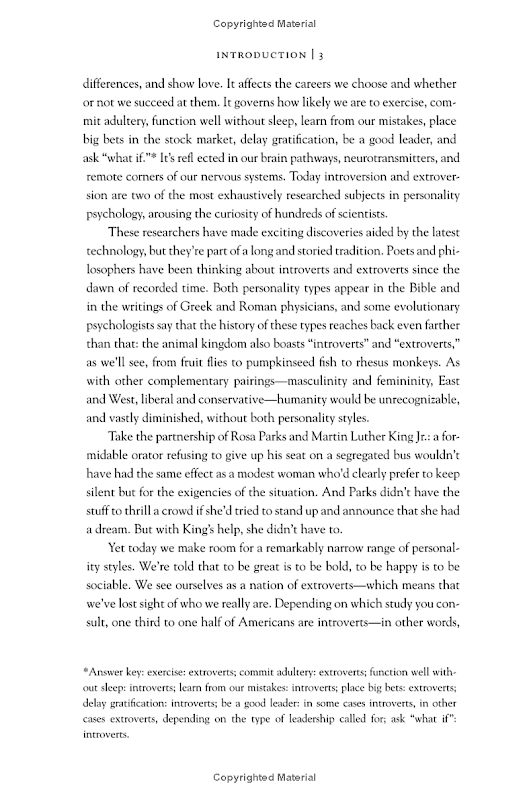
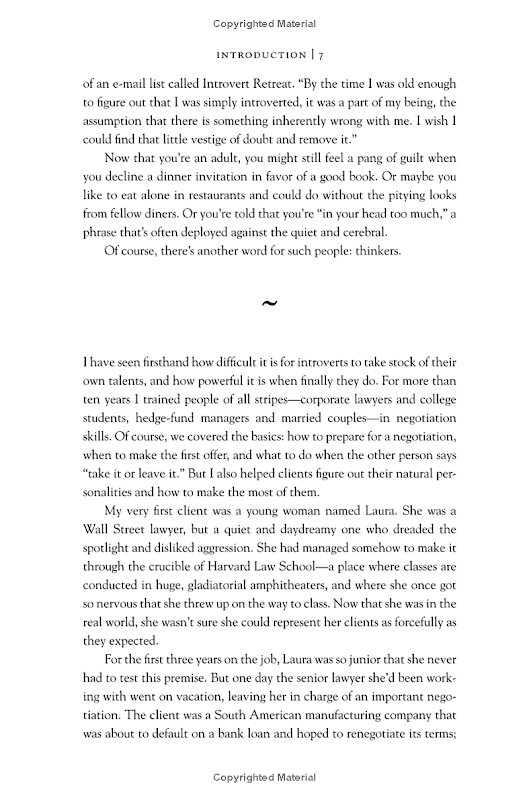
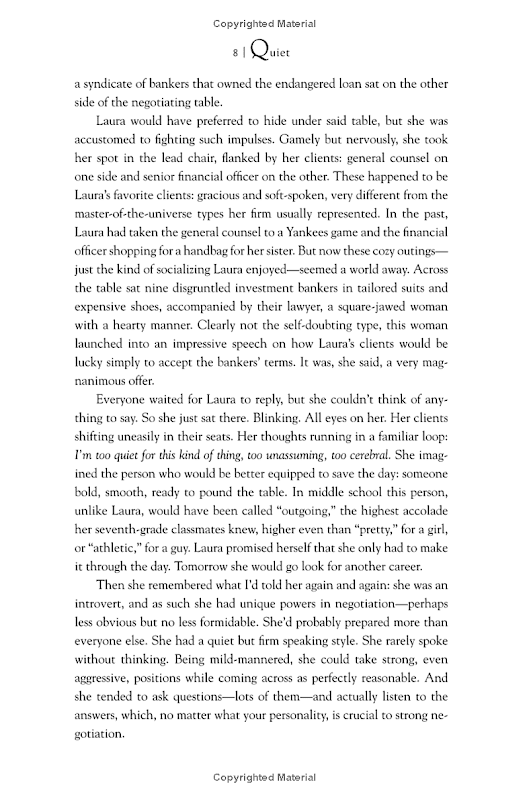
Sample pages from Quiet: The Power of Introverts in a World That Can't Stop Talking

*This is copyrighted material, do not save/distribute without owner permission


Quiet: The Power of Introverts in a World That Can't Stop Talking available formats:

Read more...

Far From the Tree

>> Sunday, November 4, 2012

Far From the Tree by Andrew SolomonFrom the National Book Award–winning author of The Noonday Demon: An Atlas of Depression comes a monumental new work, a decade in the writing, about family. In Far from the Tree, Andrew Solomon tells the stories of parents who not only learn to deal with their exceptional children but also find profound meaning in doing so.

Solomon’s startling proposition is that diversity is what unites us all. He writes about families coping with deafness, dwarfism, Down syndrome, autism, schizophrenia, multiple severe disabilities, with children who are prodigies, who are conceived in rape, who become criminals, who are transgender. While each of these characteristics is potentially isolating, the experience of difference within families is universal, as are the triumphs of love Solomon documents in every chapter.

All parenting turns on a crucial question: to what extent parents should accept their children for who they are, and to what extent they should help them become their best selves. Drawing on forty thousand pages of interview transcripts with more than three hundred families, Solomon mines the eloquence of ordinary people facing extreme challenges. Whether considering prenatal screening for genetic disorders, cochlear implants for the deaf, or gender reassignment surgery for transgender people, Solomon narrates a universal struggle toward compassion. Many families grow closer through caring for a challenging child; most discover supportive communities of others similarly affected; some are inspired to become advocates and activists, celebrating the very conditions they once feared. Woven into their courageous and affirming stories is Solomon’s journey to accepting his own identity, which culminated in his midlife decision, influenced by this research, to become a parent.

Elegantly reported by a spectacularly original thinker, Far from the Tree explores themes of generosity, acceptance, and tolerance—all rooted in the insight that love can transcend every prejudice. This crucial and revelatory book expands our definition of what it is to be human.

About the author
Andrew Solomon (born 30 October 1963) is a writer on politics, culture and psychology who lives in New York and London. He has written for The New York Times, The New Yorker, Artforum, Travel and Leisure, and other publications on a range of subjects, including depression, Soviet artists, the cultural rebirth of Afghanistan, Libyan politics, and deaf politics. His book The Noonday Demon: An Atlas of Depression won the 2001 National Book Award, was a finalist for the 2002 Pulitzer Prize, and was included in The Times of London's list of one hundred best books of the decade.

Best Books of the Month

Amazon's editors selected this title as one of the Best Books of the Month.


Available Formats:
- Hardcover
- Kindle book
Read more...
Copyright 2011 © Speed up my Brain, All rights reserved