Showing posts with label English as a second language. Show all posts

Sixty Words or Phrases Commonly Misused by ESL/EFL Students Preparing for Universities by Kenneth Cranker

>> Saturday, February 21, 2015
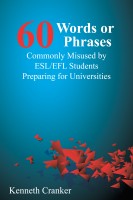

This book is for classroom or individual study for students who need to clean up their grammar at the word level in preparation for university-level academic writing. It presents 60 words or phrases that are problematic for advanced non-native students of English, exposing the errors, explaining them, and providing examples of correct usage and opportunities to practice writing.


This book is intended for classroom or individual study for students who need to clean up their grammar at the word level in preparation for university-level academic writing. It presents 60 words or phrases that are frequently problematic for advanced non-native students of English, exposing the errors, explaining them, and providing examples of correct usage. The most important points are summarized as tips, and students have the opportunity to write their own sentences with the expressions.


About Kenneth Cranker


Kenneth (Ken) Cranker studied biology, concentrating in human nutrition, at Cornell University. It was while working in a biochemical laboratory there that Ken came into contact with international post-doc English, a non-native language, and he was inspired to become an ESL teacher. After obtaining an M.S. in TESOL at SUNY Albany, he taught in Japan for twelve years, nearly half of which were at the university level. After returning to the U.S., he has been teaching primarily English for academic purposes at the University of Delaware English Language Institute, preparing conditionally admitted students for university studies.


First 25% Sample: epub mobi (Kindle) lrf
Read more...

Big Questions in ELT by Scott Thornbury

>> Monday, December 8, 2014


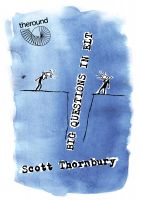
Teachers and learners of English as a second or foreign language constantly engage with certain key questions, such as 'Is memorization good?', 'What's the best kind of practice?' or 'What's the best age to start?' This book addresses 21 of those questions, informed by the author's extensive experience as well as the current state of thinking by experts in the field.


For two years now I’ve been regularly blogging about ELT-related issues that have caught my attention. The topics have been loosely organized around the format of an encyclopaedic dictionary I’d published previously, called An A-Z of ELT. I’ve since clocked up over a hundred posts that in turn have attracted thousands of comments comprising I don’t know how many tens of thousands of words.

A couple of things that have emerged from this ‘long conversation’ are: (1) the same issues come round and round, and (2) they are often framed as questions.

The issues tend to relate to my ‘other’ life as advocate of a Dogme approach to ELT teaching, i.e. the use of minimal materials so as to free up the classroom space (and the cognitive space) in order to allow student-initiated learning opportunities to arise naturally.

That the issues are framed as questions is partly due to the fact that there are still no answers to many of the concerns that exercise us, and partly because, in my teaching and in my training, I favour dialogue over monologue, and dialogue – almost by definition – entails asking questions.

Like many things online, the blog has started to become a little unwieldy, especially for new visitors, so I figured it was time to condense some of the issues and some of the questions into a friendlier format, taking a handful of the original entries as my starting point, re-working them a little to take into account the conversations that evolved online, and presenting them in the form of Big Questions.

Each Big Question, therefore, has been generated from one of the original blog posts (and I’ve thrown in a couple of new ones for good measure) and each entry is rounded off by a number of subsidiary questions – the offspring, if you like, of the Big Questions. These questions are designed as an aid to reflection (for the individual reader), or, in a training context, as a way of framing a discussion or workshop. In a sense, they are a means of re-activating, and continuing, the online conversations that the original blog posts triggered.

And, if you want to see how those conversations evolved, I’ve provided links to the original articles.


About Scott Thornbury


I'm a teacher and teacher educator, with over 30 years' experience in English language teaching, and an MA from the University of Reading. I am currently Curriculum Coordinator of the MA TESOL program at The New School in New York. My previous experience includes teaching and teacher training in Egypt, UK, Spain (where I live), and in my native New Zealand. My writing credits include several award-winning books for teachers on language and methodology, as well as authoring a number of papers and book chapters on language and language teaching. I am series editor for the Cambridge Handbooks for Teachers (CUP). I was also the co-founder of the dogme ELT group. And, currently, I am an associate of the International Teacher Development Institute (iTDi), an online campus dedicated to teacher development.


First 15% Sample: epub mobi (Kindle) lrf
Read more...

Fifty Ways to Practice Writing: Tips for ESL/EFL Students by Dorothy Zemach

>> Tuesday, September 23, 2014


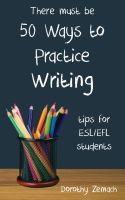
This book is made for students of English as a Second or Foreign Language. You will learn 50 ways to practice and improve writing – both with pen and paper and typing. By applying these methods, you will write more, write faster, and write more correct and more interesting papers and letters


This book is made for students of English as a Second or Foreign Language.


Learning another language is never fast, but the Fifty Ways to Practice series will speed things up by showing you how to practice more efficiently and effectively both inside and outside the classroom. These books can be used by beginners and advanced students alike.


You will learn 50 ways to practice and improve writing – both with pen and paper and typing. By applying these methods, you will write more, write faster, and write more correct and more interesting papers and letters.


You do not need to be living in an English-speaking country or be currently taking an English class to use this book. However, students who are already in a class can also use this book to improve their writing more quickly and easily. You do not need to have English-speaking friends or acquaintances to write to or even any idea of what to write about. This book will provide those ideas.


When you are done with this book, why not write and tell us how you liked it?


Price: $0.99 USD

First 20% Sample: epub mobi (Kindle) lrf
Read more...

Principles of Written English, Workbook 3 by Maggie Sokolik

>> Sunday, April 20, 2014


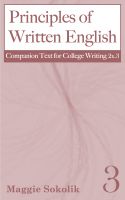
This workbook accompanies the online course College Writing 2.3x, Principles of Written English, the third of a series of three courses offered by College Writing Programs of the University of California, Berkeley through edX.org. You do not need to have taken the first and second courses to benefit from this third one.


This workbook accompanies the online course College Writing 2.3x, Principles of Written English, the third of a series of three courses offered by the College Writing Programs of the University of California, Berkeley, through edX.org. You do not need to have taken the first or second courses to benefit from this third one.


This workbook offers additional ways to practice writing and reviewing the materials for the online course. The workbook includes a summary of information given in the course, writing prompts, and quizzes (with suggested answers).


If you would like to purchase this workbook and are not taking the course, you may still find use for the materials. However, it should be noted that the course is offered free of charge, so you are welcome to join the live course. Information on how to do so and the website address are noted in the workbook’s introduction.


About Maggie Sokolik


Maggie Sokolik received her Ph.D. in Applied Linguistics from UCLA. She is the author of over twenty ESL and composition textbooks. She has also written for and been featured in several educational video projects in Japan. She is the editor of TESL-EJ, a peer-reviewed journal for ESL/EFL instructors.


She has taught in College Writing Programs at UC Berkeley for over 20 years, and travels frequently to speak about grammar, writing, and instructor education, most recently in Querétaro, Mexico; Shenzhen, China; Tokyo, Japan; and Hyderabad, India.


Price: $2.99 USD

First 20% Sample: epub | mobi (Kindle) | lrf
Read more...
Copyright 2011 © Speed up my Brain, All rights reserved